
July 20, 2026
Your team might handle hand-labeling 50 bottles a day without issue, but as you scale to 500 or 5,000, that manual process quickly becomes a costly bottleneck.
Reaching an automation milestone is vital for growth. Beyond just speed, manual placement leads to human error; industry data suggests that manual application can waste up to 10% of label inventory through unfixable creases and bubbles. Bridging the gap between crooked stickers and professional branding requires the right labeling equipment. Selecting the appropriate hardware immediately saves thousands in labor and material waste.
Whether you need a compact benchtop system or a fully integrated automated labeling system, selecting the right label applicator begins with understanding your product, production environment, and long-term growth goals.
At Chicago Coding Systems, we help manufacturers implement custom labeling solutions designed around real production needs—not one-size-fits-all equipment.
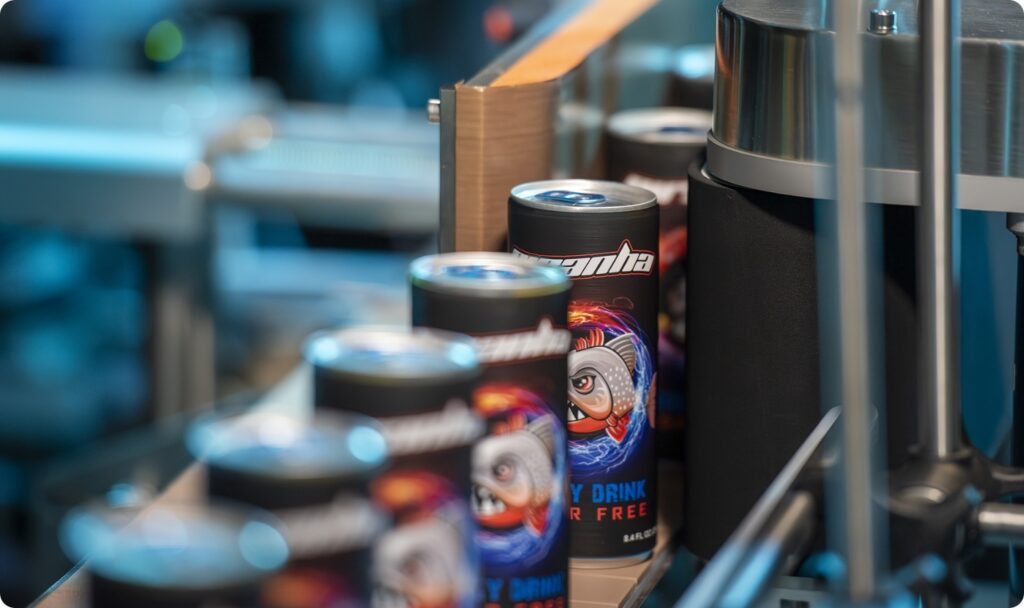
How Your Container Shape Dictates Your Labeling Machine
Avoiding the “bubble and crease” nightmare starts with matching your labeling equipment to your product’s exact container shape and substrate.
In industrial labeling, the substrate refers to the surface material receiving the label. Adhesives behave differently depending on whether the surface is glass, corrugated cardboard, plastic, flexible film, or metal. A glass hot sauce bottle, for example, requires a completely different labeling approach than a flexible pouch or shrink sleeve container.
Your product geometry directly impacts the type of label applicator your production line requires:
- Flat Boxes: Use a top-down carton labeler or a standard box label applicator.
- Round Bottles: Need a wrap-station—a motorized belt that spins the cylinder to roll the sticker on flawlessly without wrinkling.
- Wide Pouches: Rely on the machine's web width (the maximum label roll width accepted) to ensure your largest designs actually fit through the dispenser.
- Oval Containers: Require dual-sided applicators for simultaneous front and back placement.
Matching the machine to the physical characteristics of your packaging is the first major step toward successful automation. Once the container shape is identified, the next step is determining how labels are physically applied.
Choosing Between 'The Wipe' and 'The Blow' for Precision
Selecting an automatic label applicator machine requires understanding exactly how the sticker meets the surface. If you are packaging standard flat boxes or sturdy craft beer cans, the "Wipe-on" method is your workhorse. It acts just like your thumb, dispensing the label and physically brushing or pressing it onto the rigid product as it moves past.
Fragile items or recessed jam jar lids demand a completely different approach. Enter "Tamp-Blow" technology. Instead of physically brushing the product, a pad holds the sticker using a vacuum, extends toward the container, and fires a quick air blast to shoot the label securely onto the surface. This non-contact labeling prevents delicate bakery clamshells from crushing under mechanical pressure.

To choose between wipe-on vs tamp-blow application methods when evaluating pressure sensitive vs heat shrink labeling setups, remember these basic rules:
- Wipe-on (Contact): Best for maximum speed on rigid bottles and sturdy flat cartons.
- Tamp-blow (Non-contact): Essential for fragile packaging and reaching into recessed container areas.
Once you know exactly how the label lands, you must secure your investment by sizing your machine for your current throughput and future growth.
Sizing Your Machine for Your Current Throughput and Future Growth
Figuring out how fast your machinery needs to run starts with a simple metric: Throughput. Measured in Units Per Minute (UPM), this number dictates how to determine labeling speed requirements for your facility. Do not just look at today's orders. If you label 2,000 bottles daily now but plan to double sales next year, buying equipment maxed at your current volume guarantees a future bottleneck.
Your choice between automatic vs semi-automatic labeling machines depends heavily on matching your required UPM with your physical floor space. A semi-automatic benchtop unit requires an operator to manually load each item, whereas an automatic in-line system integrates directly over your existing conveyor belt. Use these product throughput and line speed synchronization benchmarks to find your ideal fit:
- Manual Hand-Labeling: 5-15 UPM
- Semi-Automatic Benchtop: 15-40 UPM
- Fully Automatic In-Line: 50-300+ UPM (requires a high speed label applicator)
To keep operations flowing smoothly, your labeler cannot be slower than your upstream equipment, like a liquid filler or box taper. Matching these production rates prevents frustrating conveyor backups. Purchasing the correct capacity protects your growth and prevents premature equipment obsolescence.
Additional Features to Consider When Selecting a Label Applicator
Beyond container shape and production speed, long-term labeling performance depends on choosing a system that can adapt to your operational needs. Many manufacturers require print-and-apply capabilities that support variable data and automated product tracking while maintaining flexibility for future growth.
Key features to consider include:
- Print-and-Apply Capabilities: Automate the printing and application of variable data such as:
- Lot codes
- Expiration dates
- Barcodes
- QR codes
- Serialized tracking information
- Barcode Scanning Integration: Integrated barcode scanning solutions help:
- Verify label accuracy
- Improve product traceability
- Support compliance requirements
- Reduce production errors across food, pharmaceutical, logistics, and industrial manufacturing environments
- Future Flexibility: Modular labeling equipment allows your operation to adapt to:
- New container sizes
- Additional SKUs
- Seasonal packaging updates
- Regulatory changes
- Increased production demands
Choosing flexible automation solutions helps protect your investment while supporting long-term operational growth.
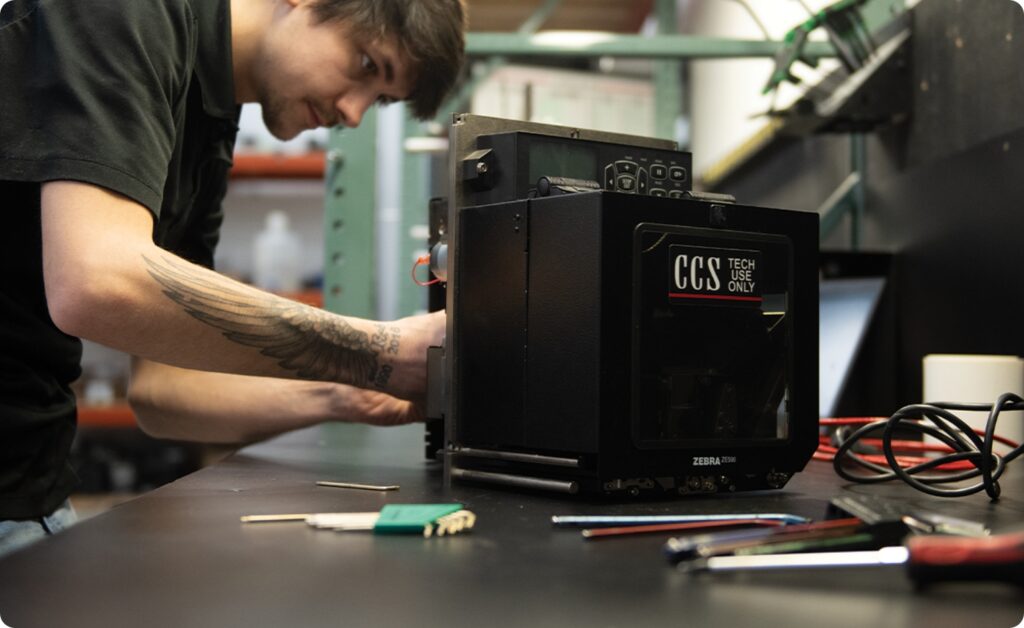
Why Manufacturers Choose Chicago Coding Systems
For over 60 years, Chicago Coding Systems has helped manufacturers improve production efficiency with customized labeling, marking, coding, and scanning solutions.
Unlike companies that simply sell equipment, CCS takes a consultative approach to automation. Every production line is different, which is why our team evaluates your containers, workflows, production speeds, compliance requirements, and future growth goals before recommending a solution.
What Sets CCS Apart:
- Over six decades of industry experience
- Fully customized automation solutions
- Labeling, coding, scanning, and software integration expertise
- Consultative engineering approach
- 24/7 technical support
- Scalable systems designed for future growth
If you’re evaluating label applicators, automated labeling systems, or custom labeling equipment, Chicago Coding Systems can help you identify the right solution for your operation.